Manage your SMS history
Find out how to view your sent messages log from your OVHcloud account
OVHcloud SMS offers are only available in the following countries: France, the United Kingdom, Ireland, Spain, Italy and Poland.
Objective
You can view and download a log of your sent SMS messages from the OVHcloud Console. This guide will explain how to do this.
Requirements
- An OVHcloud SMS account with at least 1 sent SMS.
OVHcloud Console Access
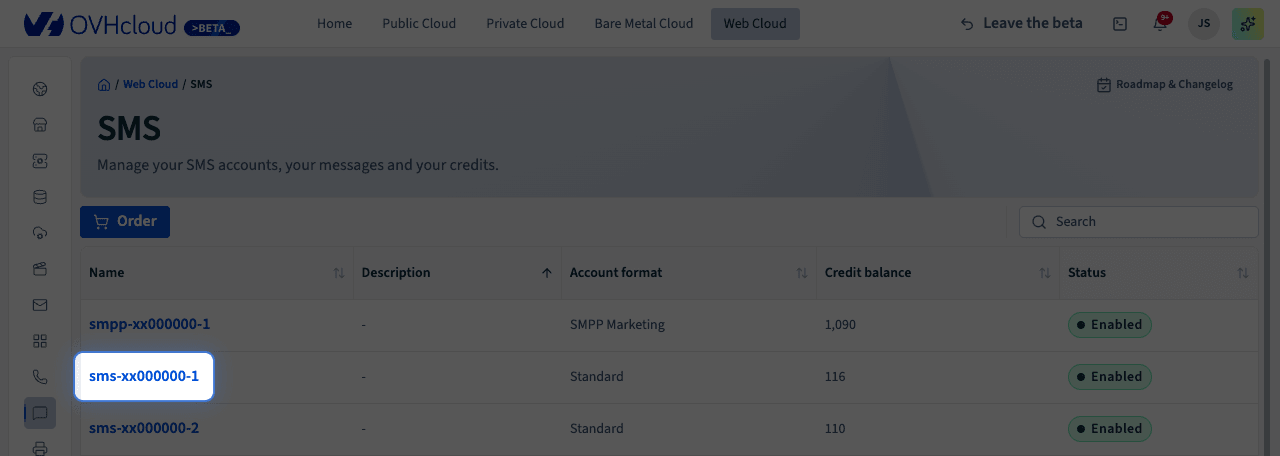
- Direct link: SMS
- Navigation path:
Web Cloud>SMS> Select your SMS account
Instructions
The log records the date, time, type, sender, recipient, contents and status of each SMS.
In the OVHcloud Console, you can view SMS messages sent in the last 6 months (or the last 5,000 SMS messages if you have sent more than 5,000 SMS messages in the last 6 months).
To view older SMS messages (up to the last 12 months), you can download your SMS history in CSV format, after choosing the period you want from Filters: the export only covers the selected period. See Step 2 of this guide.
Step 1: Viewing the log in the OVHcloud Console
Click the SMS & Campaigns tab. The log is displayed directly in this tab: select SMS to display the log of your unit SMS messages, or Campaigns to display the list of your SMS campaigns. Your campaign statistics are shown in the Overview tab.
By default, the list displays the SMS messages from the last 7 days. To display a different period, change it from Filters (see below).
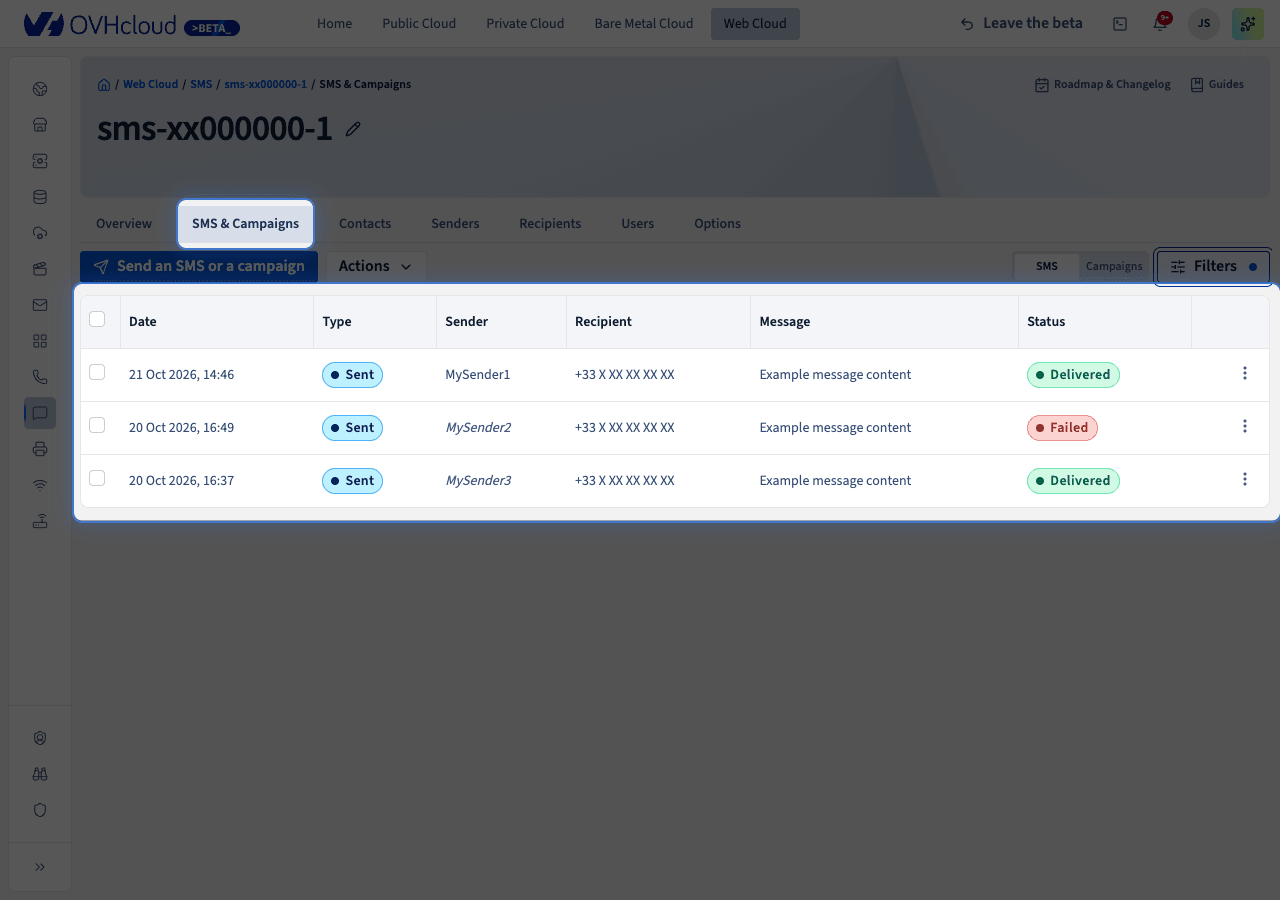
The most recent SMS messages are displayed first.
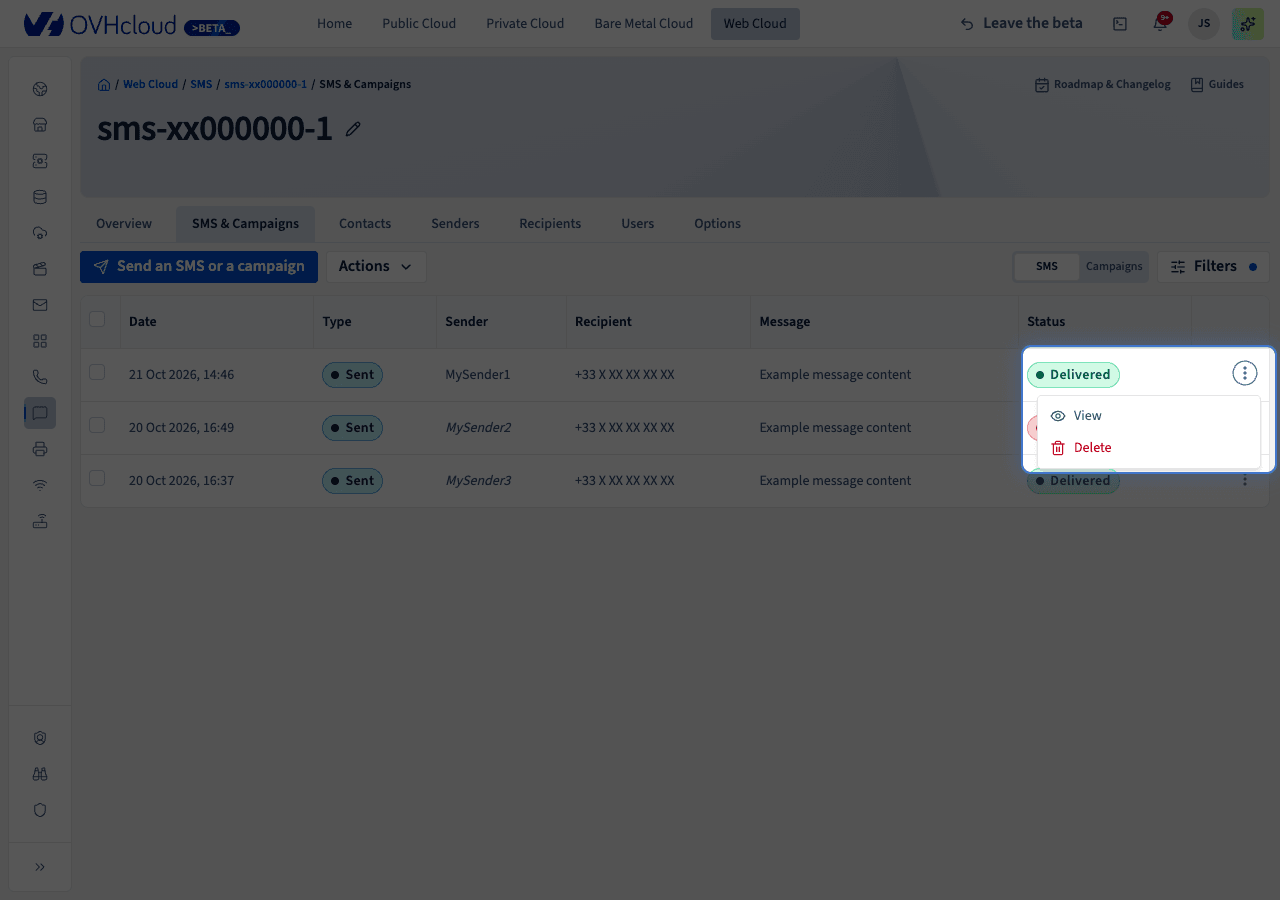
The ⋮ button to the right of each SMS lets you view it (View) or delete it (Delete).
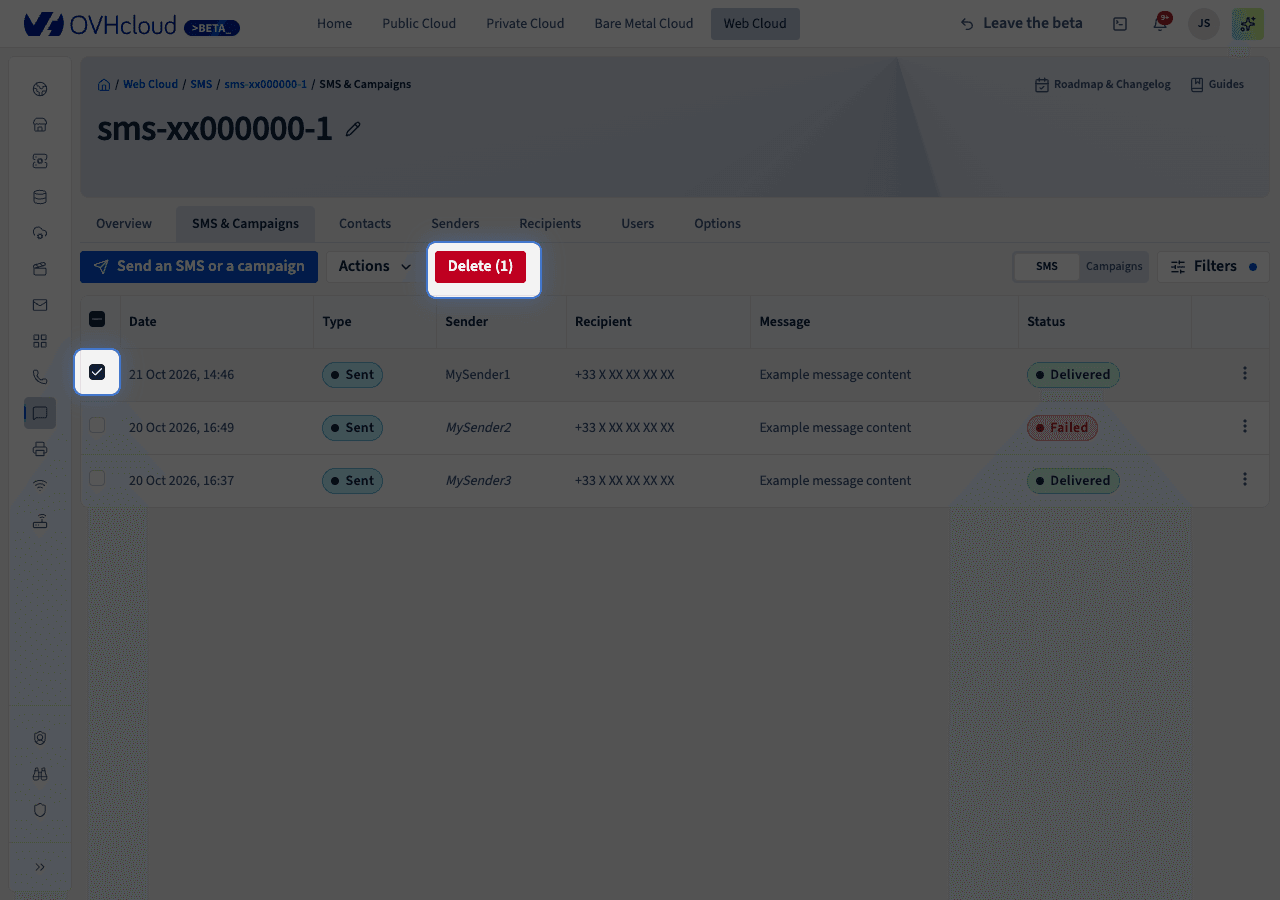
To delete several SMS messages at once, tick the boxes next to each message. The Delete button, followed by the number of SMS messages selected (for example Delete (1)), appears above the log, next to Actions.
From Filters, you can filter the log by type (Sent, Received or Scheduled), by period (Today, Last 7 days, Last 30 days, This year or Custom), by sender, by recipient or by status (Delivered, In progress, Temporary failure or Failed).
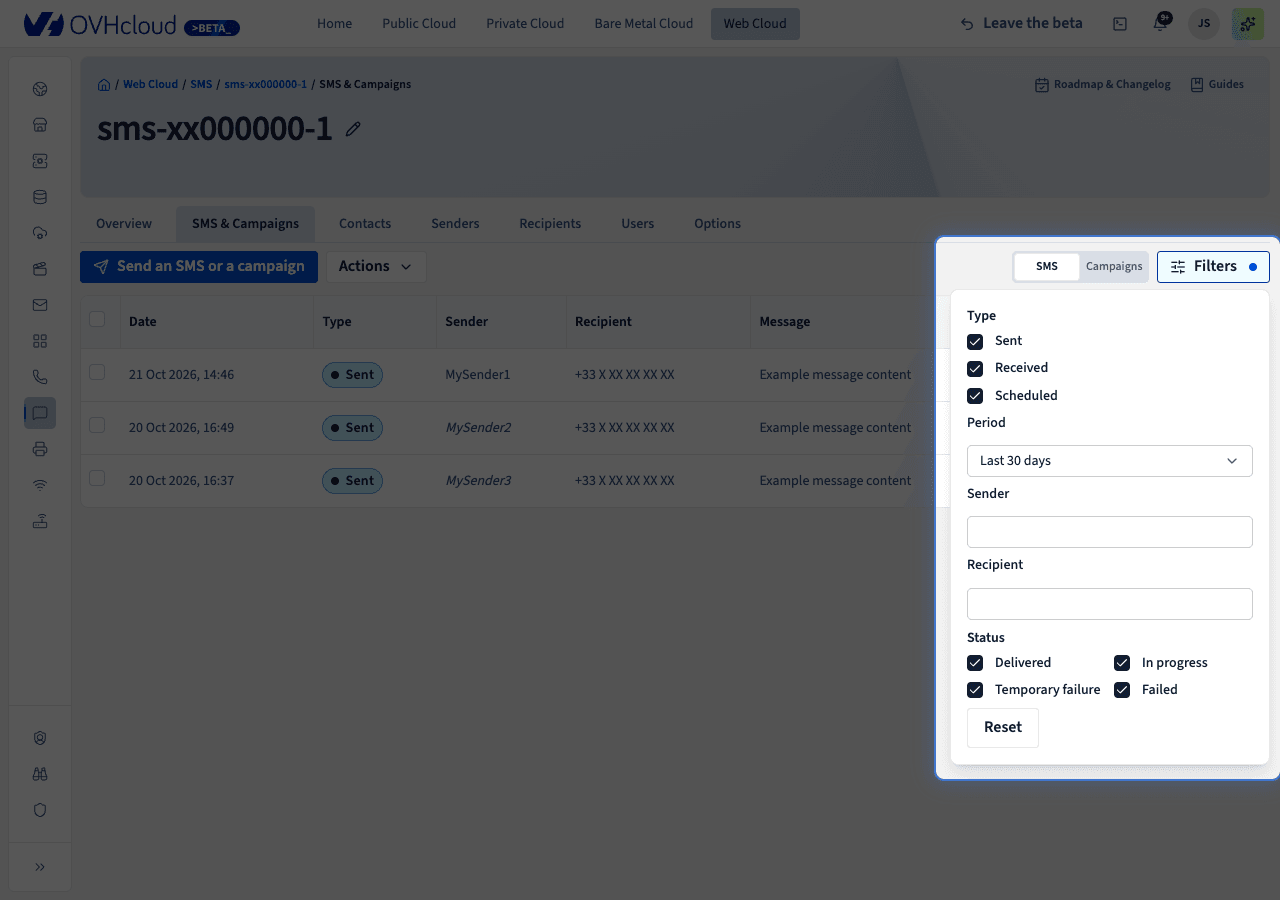
Step 2: Downloading the sending log as a CSV
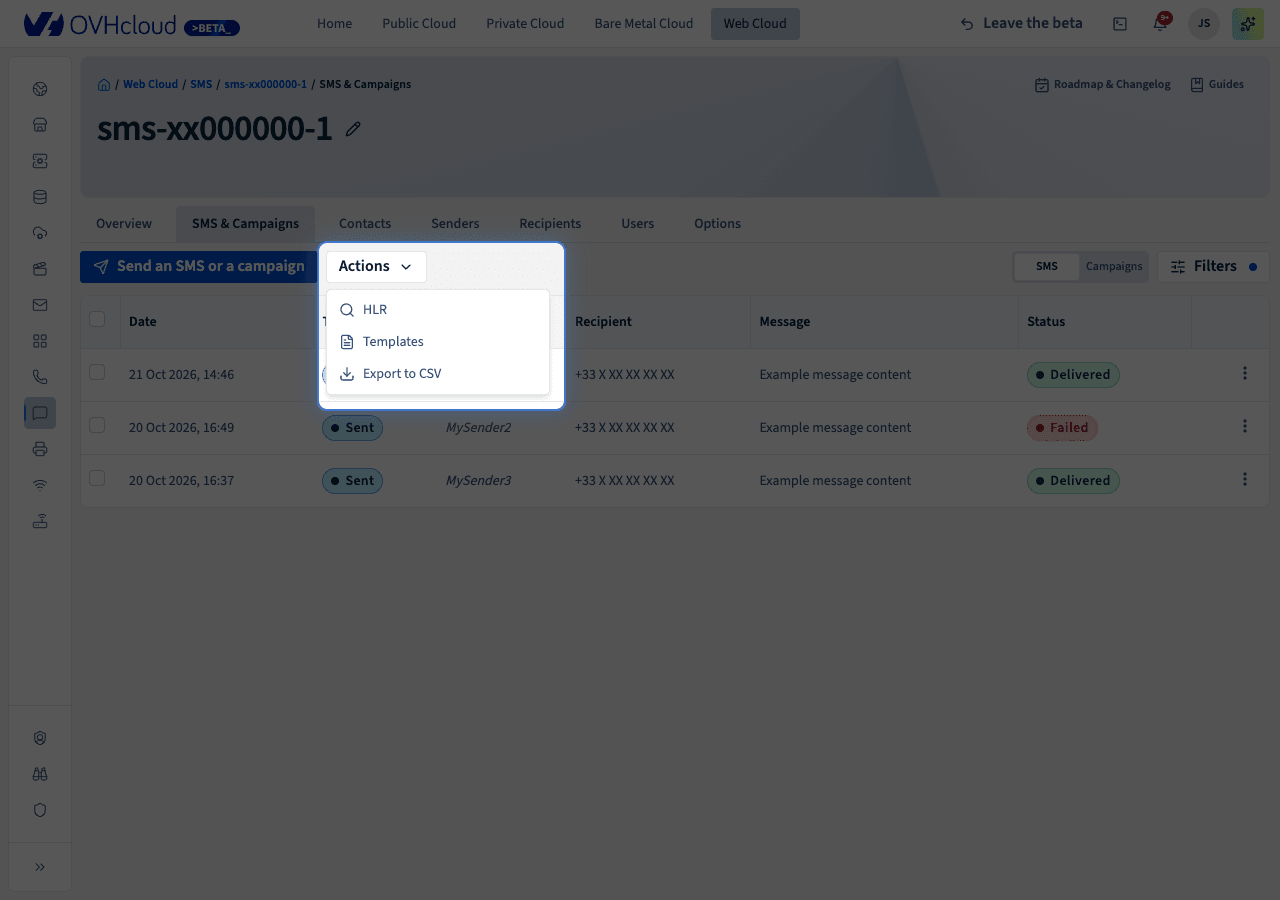
Click the Actions button above your log, then Export to CSV to download your SMS log in .csv format. The export covers the period selected in Filters (Last 7 days by default). To export an older history, choose This year or Custom before exporting.
You can then view the log using a spreadsheet program. The information will display as in the example below.
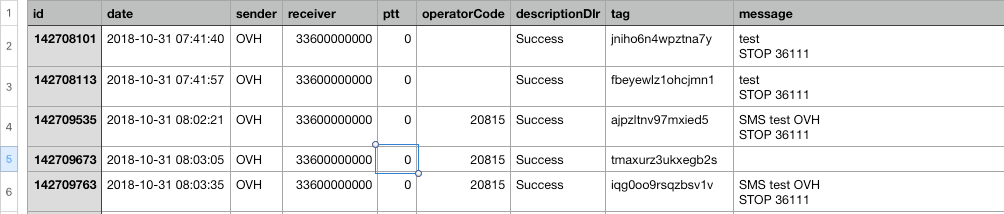
Here is a breakdown of the information included in the log:
Further information about the ptt codes and various DLR IDs can be found in the final section of the guide Everything you need to know about SMS users.
Go further
Join our community of users.