
Tutorial - Backing up your WordPress website
Find out how to back up the content of your WordPress website and its database
Objective
Even taking all precautions, your website remains exposed to a potential malfunction (handling error, accidental overwriting of files, faulty configuration, security breach or hacking) that can result in partial or total loss of your data.
Regular backups of your website is a good practice. This will enable you to revert your website to an earlier state when you experience a technical issue.
On a web hosting plan, you are responsible for your website's backups. Although OVHcloud offers automated backups (non-contractual), we recommend to carry out regular backups yourself, and to manage them using appropriate backup media (hard disk, USB drive, etc.) as an added precaution.
Information regarding OVHcloud service administration and how to find appropriate assistance
When using OVHcloud guides, please be aware of the following conditions:
- User instructions aim to provide as many details as possible but cannot cover individual use cases. You might need to adapt the pertinent actions to your requirements.
- The OVHcloud ecosystem is built for flexibility and freedom of choice. Customers are therefore responsible for the secure and proper configuration of their services. To prevent data loss, we strongly recommend to apply backup strategies to all your important data.
- Our guides and tutorials may reference third-party software or services in combination with OVHcloud solutions. The technical support provided by OVHcloud does not include the configuration of systems or products outside of our responsibility. This includes but is not limited to:
- Operating systems and user interfaces (Windows, Debian, Plesk, etc.).
- Any other third-party software (FTP clients, email software, etc.).
- Services offered by other providers (DNS, APIs, user interfaces, etc.).
To receive the appropriate assistance for any issues you might experience, follow these guidelines:
- You seek personalized advice or you would like to discuss a topic that is not covered in detail by our documentation?
Join the OVHcloud Community to search for your topic and reach out to other users. - You need to report an incident regarding your OVHcloud service or you are experiencing difficulties in the OVHcloud Control Panel?
Create a support request in our Help Centre. - You require professional assistance for your project or you need help with tasks outside our support scope?
Visit our partner portal to search for experts who are familiar with OVHcloud solutions. - You are looking for more detailed information regarding our support levels and Professional Services?
Please visit our web pages for OVHcloud support levels and OVHcloud Professional Services.
You can participate in improving our documentation:
- You would like to share feedback to improve a guide page or you want to report insufficient information on a specific page?
Use the "Was this page helpful?" buttons at the bottom of the page to let us know. - You would like to propose a specific documentation update?
Use the "Edit this page" function, available at the bottom of the page and in the sidebar.
If you experience any difficulties, contact WordPress support.
This tutorial explains how to back up the content of your WordPress website and its database.
Requirements
Instructions
You can perform a backup in two ways: manually or by using a plugin.
OVHcloud provides an automatic data backup service (non-contractual) and makes these backups available. However, it is your responsibility to set up your own restoration policy and to determine restoration points at times you deem appropriate.
Method 1: Perform a manual backup
Manual backups should be done in two steps. First, you need to back up your website's PHP files, then export your database.
1.1 Back up your website files
Retrieving your data is done via an FTP client like FileZilla. See our tutorial "Using FileZilla with your OVHcloud hosting" for more information.
When you are logged in to your server via FTP, you will need to retrieve the contents of the www directory from the right pane (drag and drop). This directory contains all the files and directories of your WordPress site (configuration, themes, media, etc.).
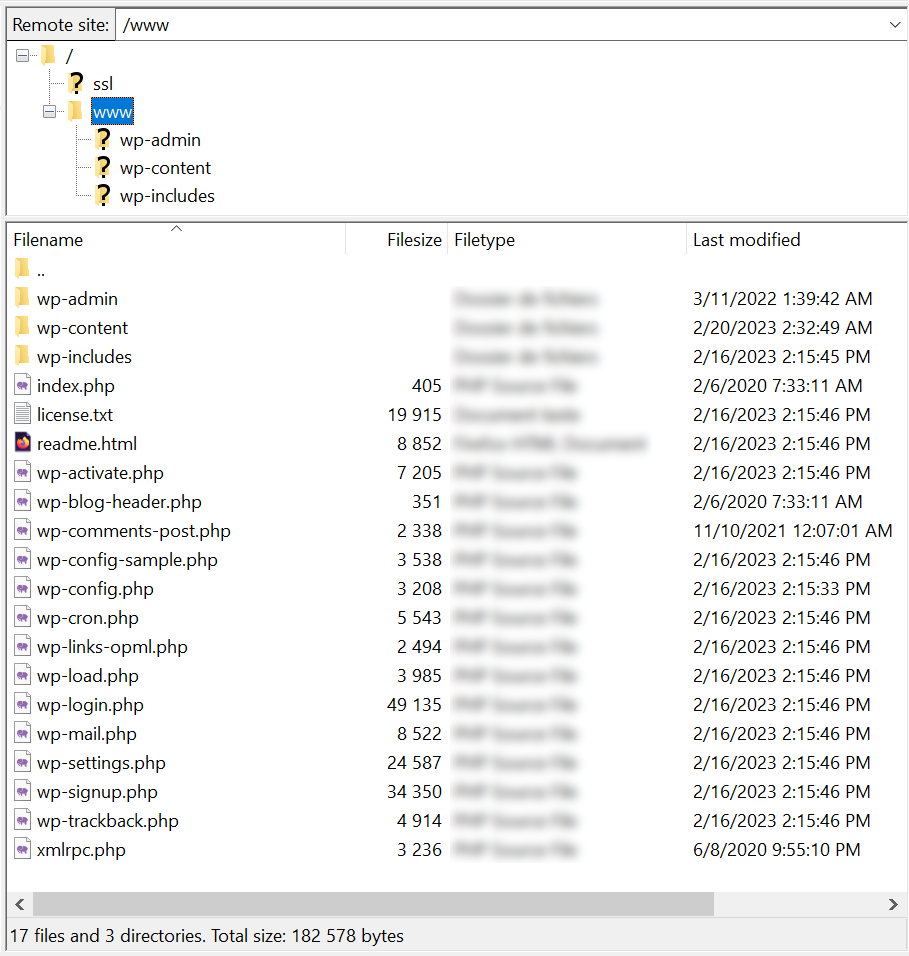
Click on the www directory and drag it to the directory of your choice in the left window. File transfer will start automatically.
If your website experiences any issues, you will need to do the opposite by overwriting the destination files.
1.2 Export your database
To export your database, go to the PHPMyAdmin interface via the URL that was sent to you when you subscribed to your web hosting plan.
Please refer to our guide on exporting a database.
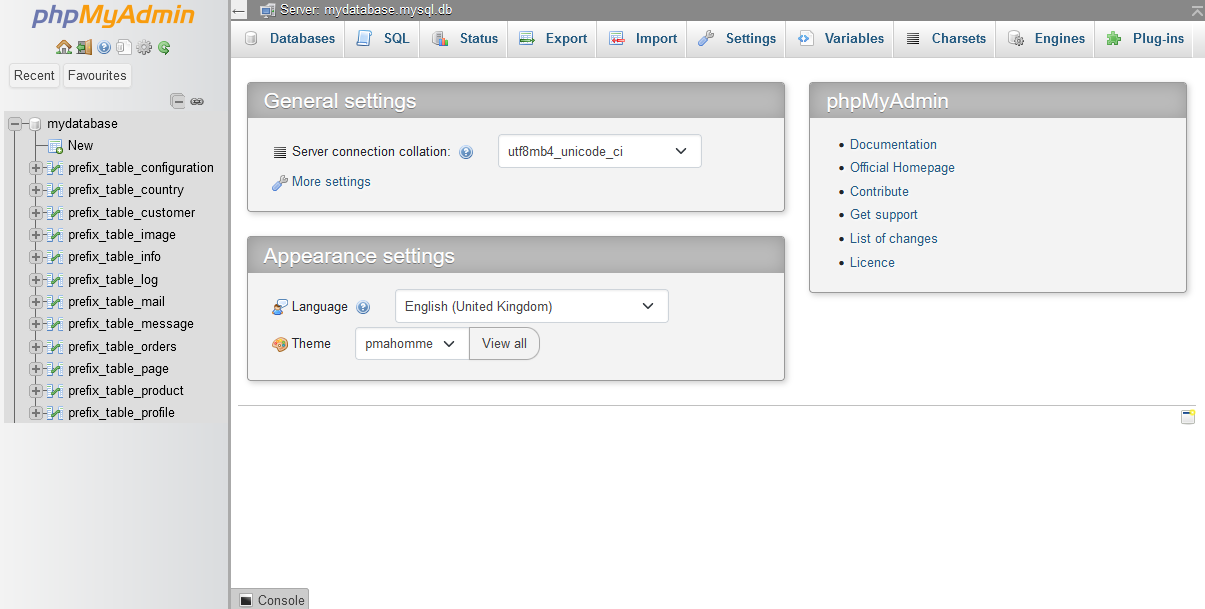
Click Export at the top of the page:
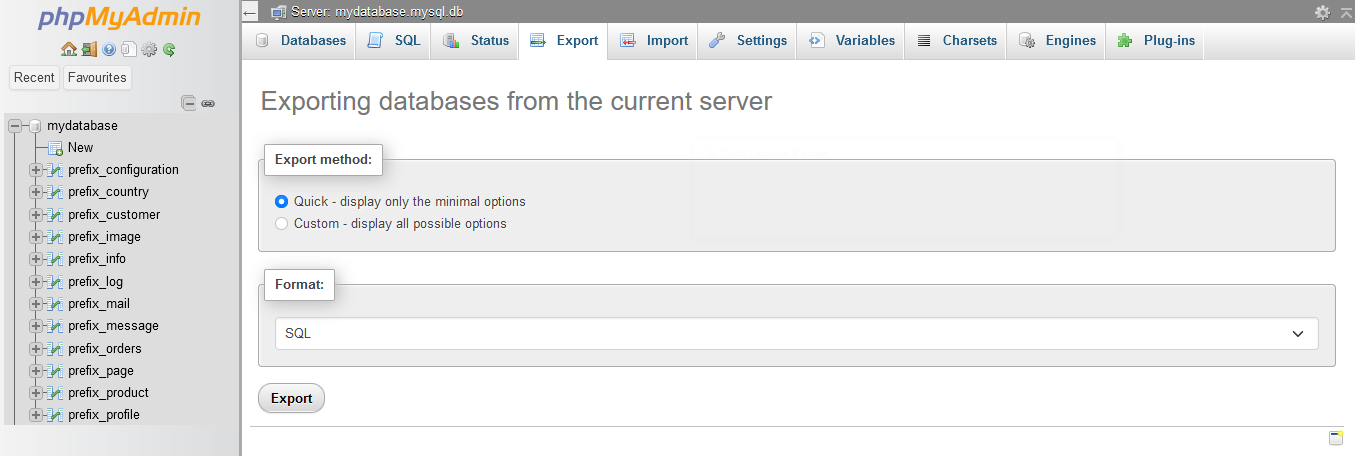
Leave the default choices: Quick export method and SQL format.
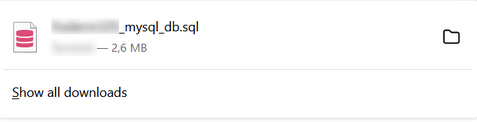
Click Go and you will download your entire database in Structured Query Language (SQL) format.
Method 2: Create a backup with a plugin
There are many WordPress plugins you can use to manage backups. The most popular is UpdraftPlus, which has several million active installations. The free version is enough to back up your website. The premium version offers more options such as incremental backups, a migration tool, multisite backup, more choices on clouds for storing data, etc.
Download the .zip file to your computer. For the sake of clarity, the downloaded plugin file will be renamed updraftplus.zip in the examples below.
2.1 Log in to the administration interface to install the plugin
By default, this is your domain name followed by /wp-admin:
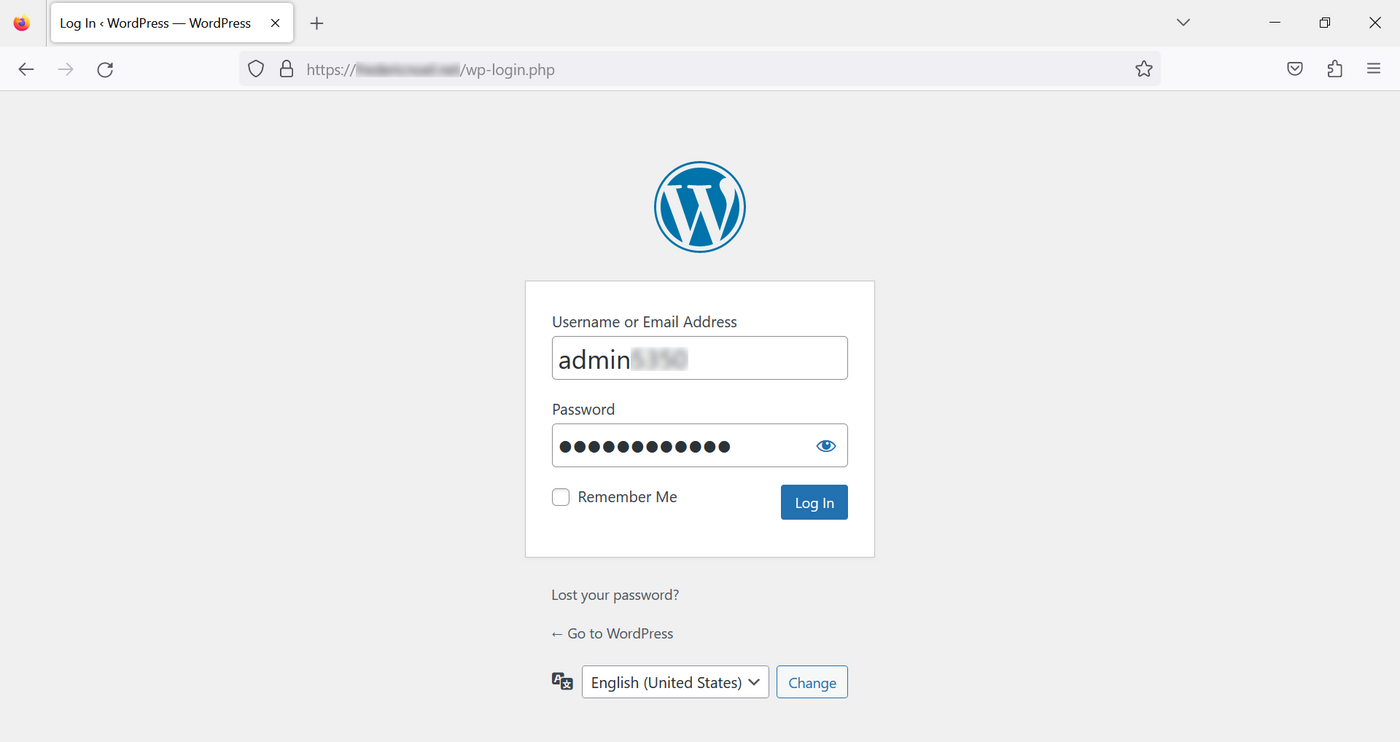
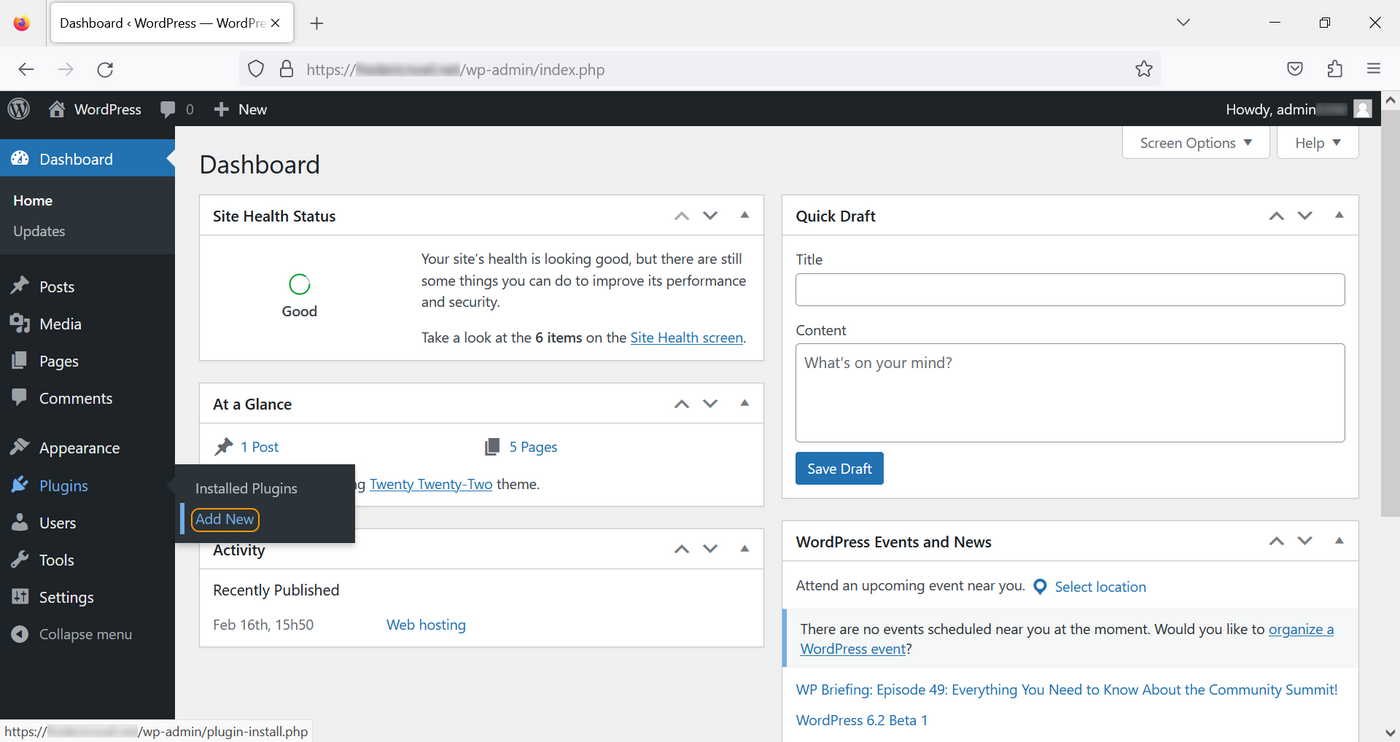
On the home page, go to the Plugins section, then click Add New:
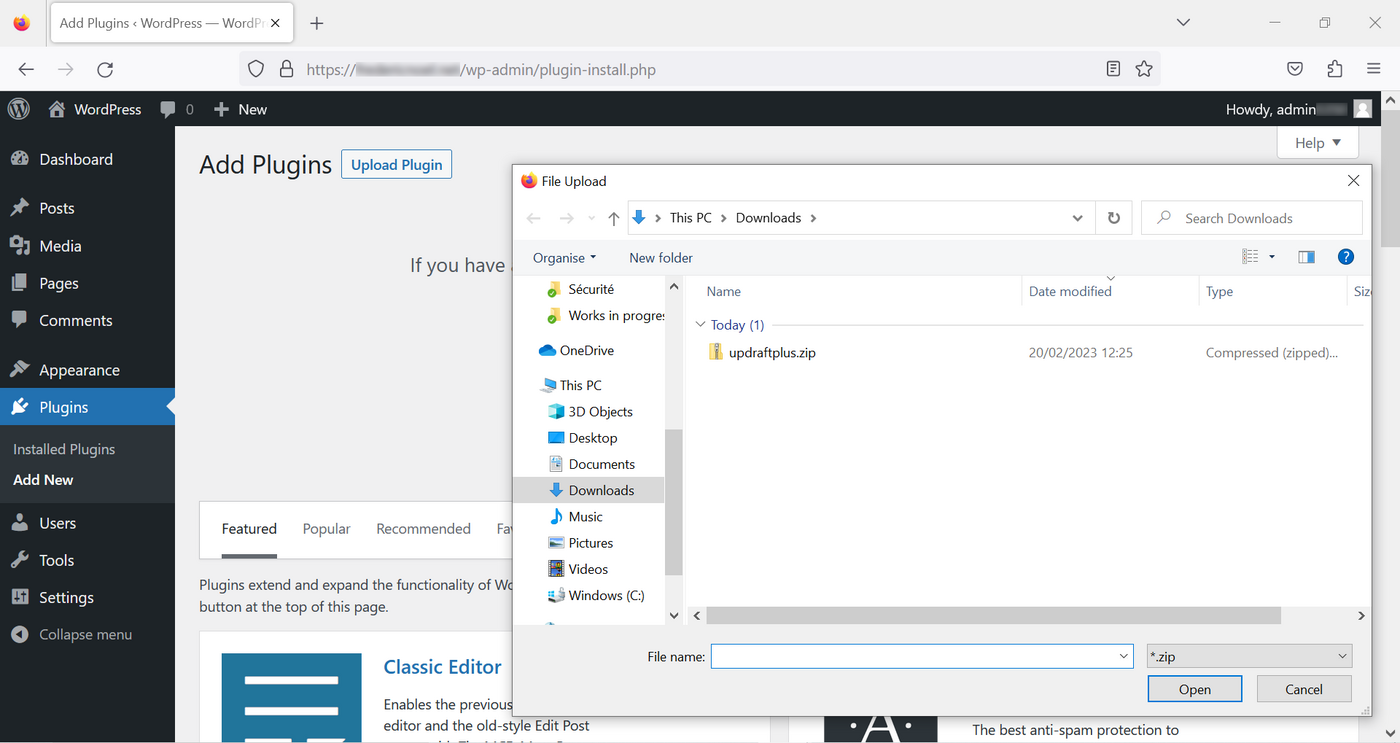
Upload the plugin by clicking the Browse button:
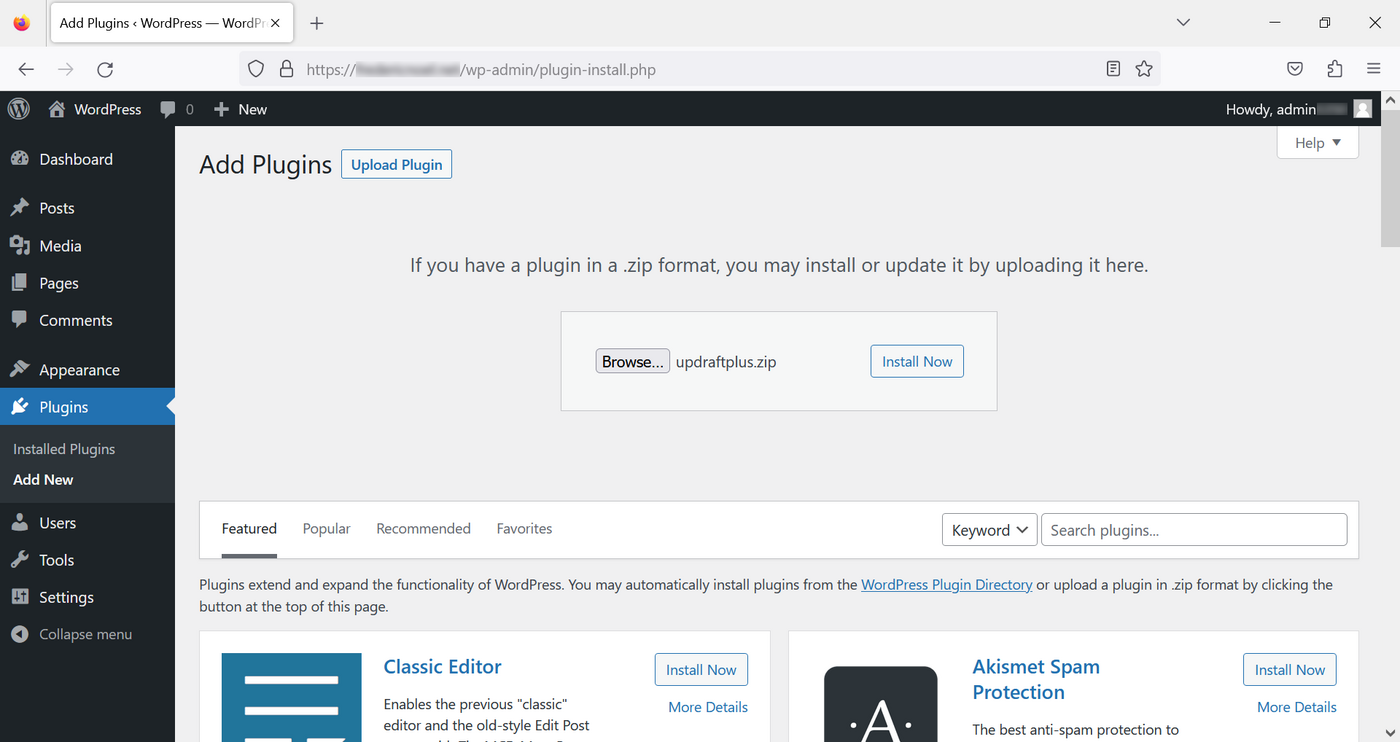
Click Install Now:
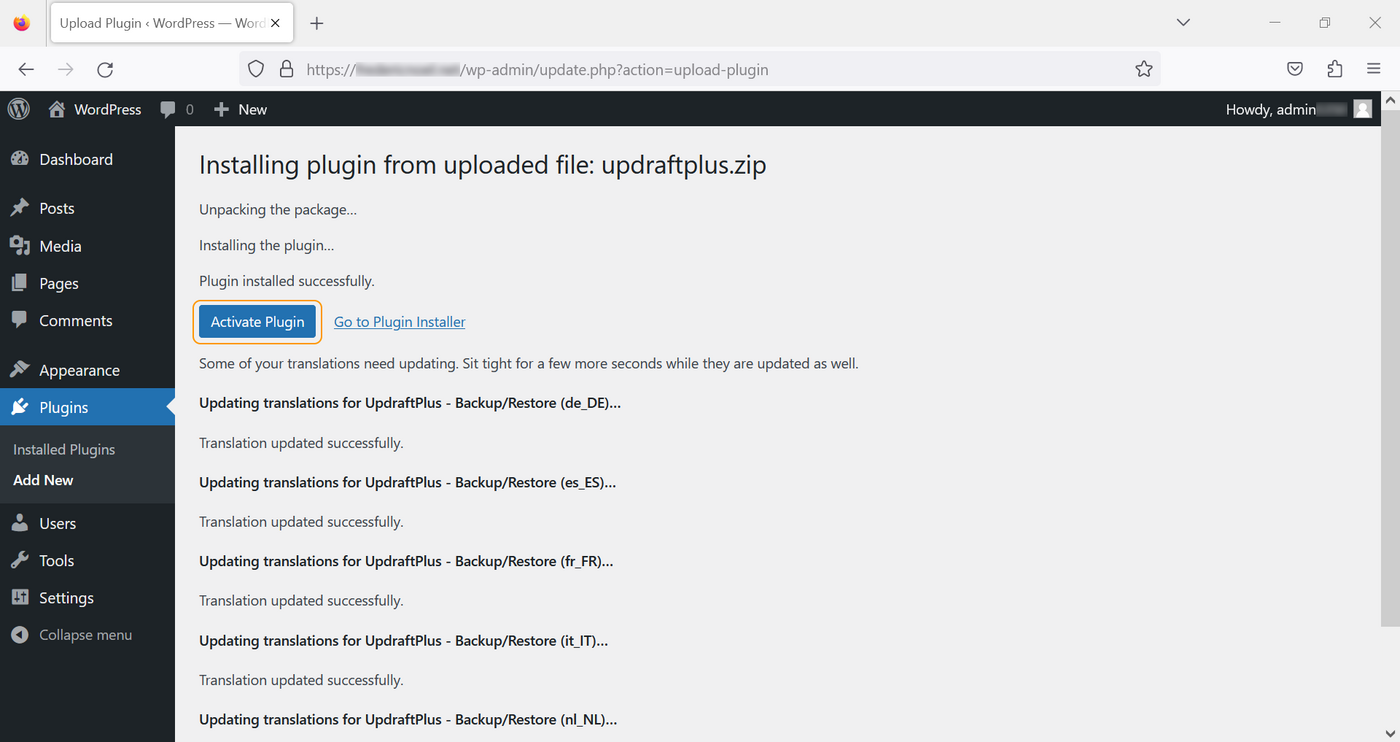
After installation, you are prompted to activate the plugin:
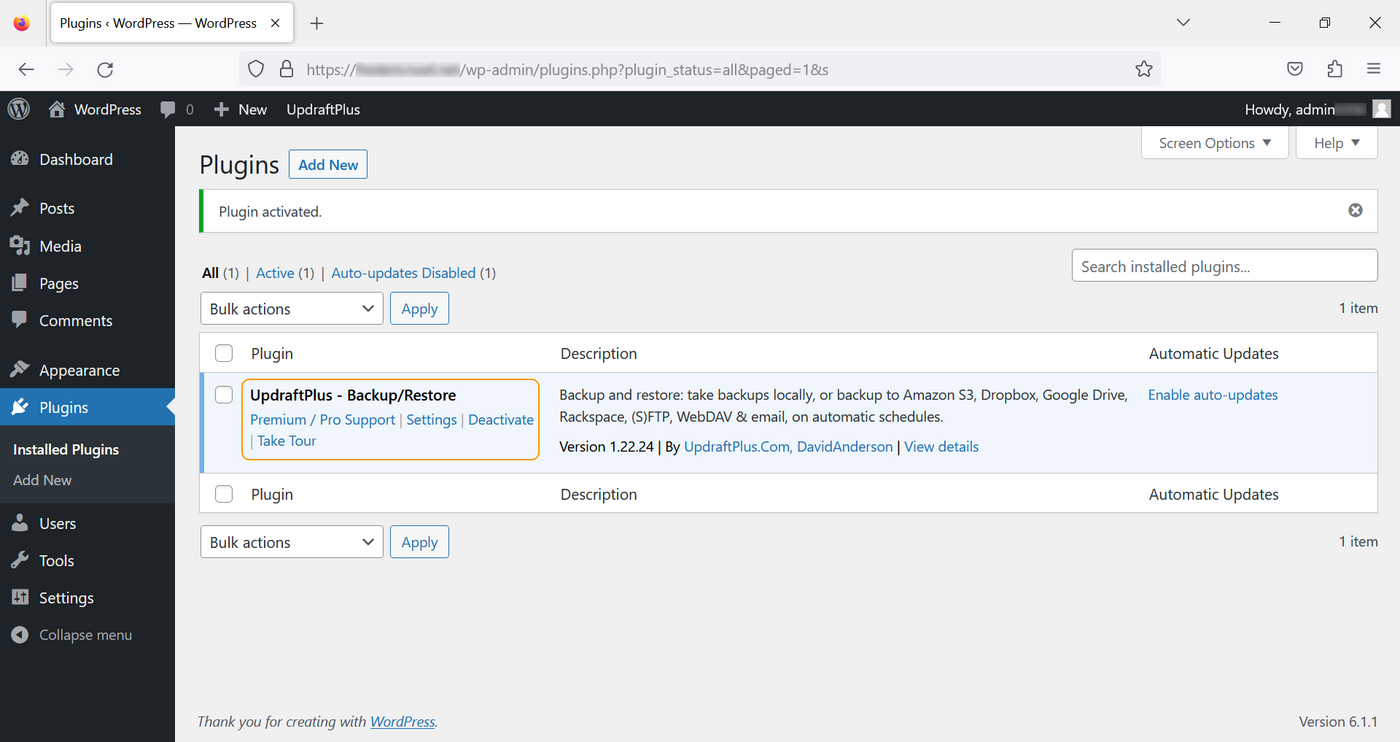
Once you have enabled it, it will appear in the Plugins list:
2.2 Configure your backups
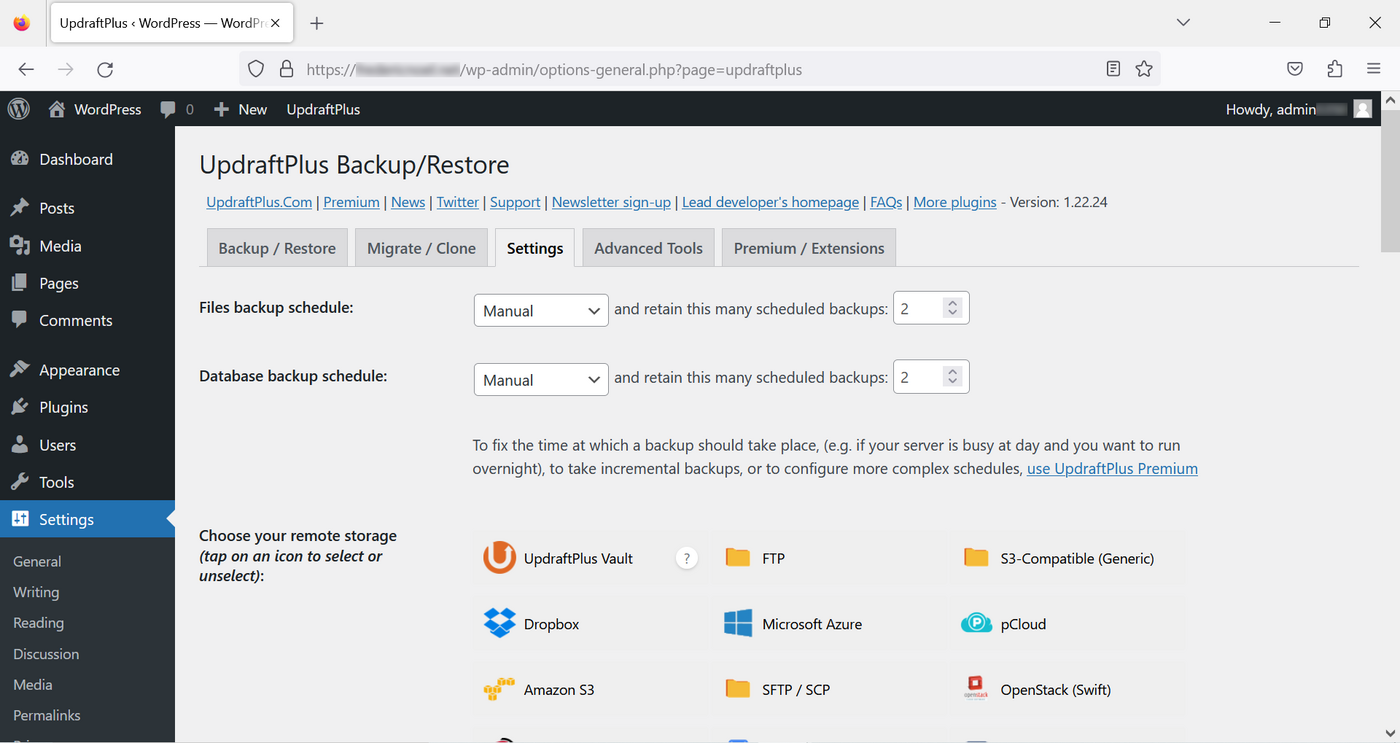
On the page mentioned above, click on Settings. Then, on the UpdraftPlus Backup/Restore page, click on the Settings tab:
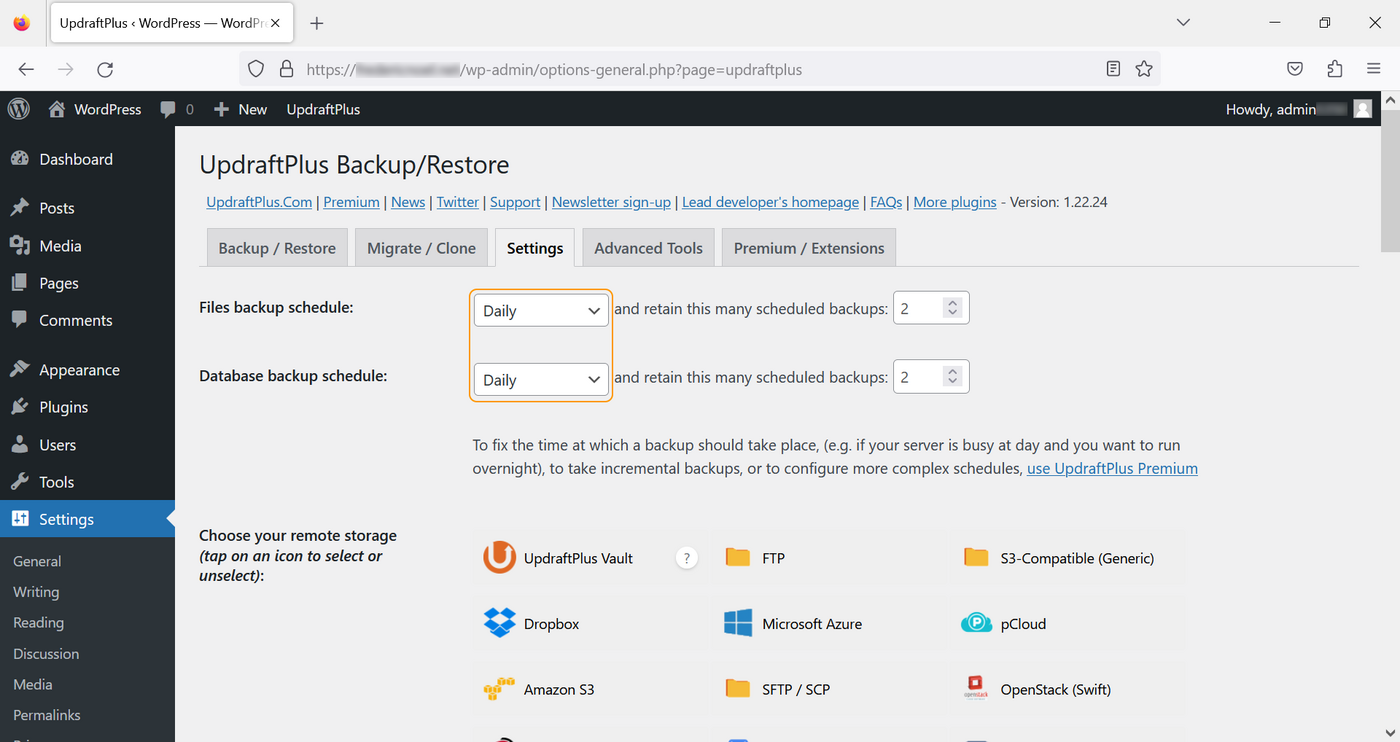
Set the backup schedule to daily for your files and your database:
Choose Email backup.
Backups will be sent to the email address of the administrator account (the account you are using):
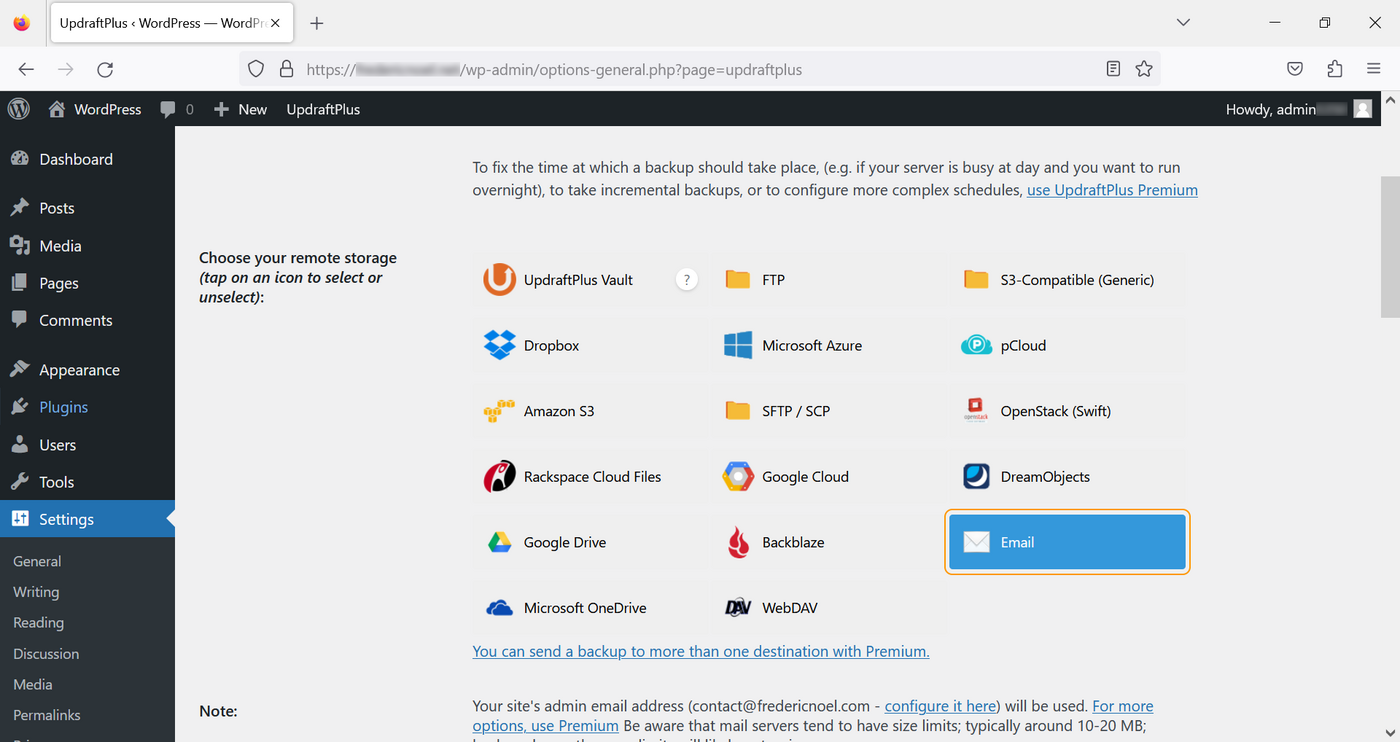
At the bottom of the page, click Save changes to validate.
2.3 Perform your first backup
Go back to the Backup/Restore tab and click the Backup Now button:
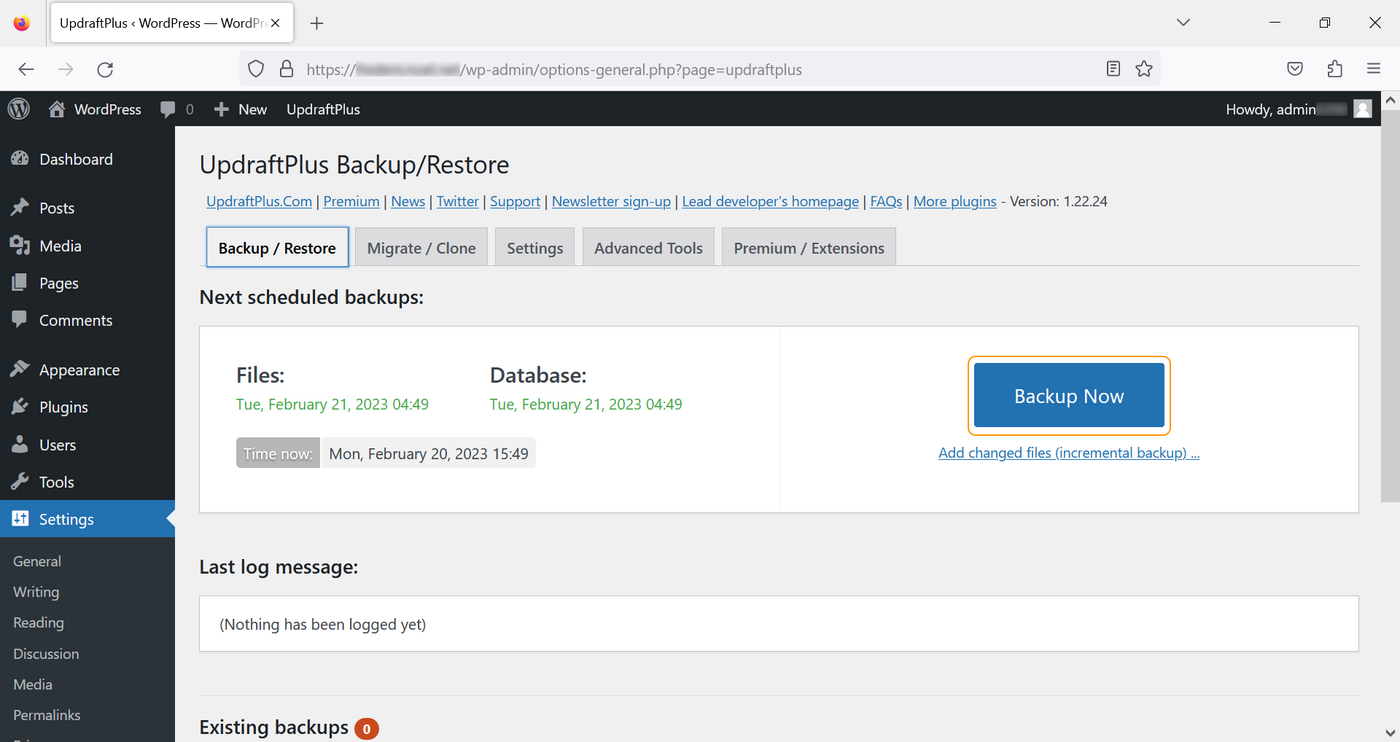
In the window that pops up, click again on Backup Now:
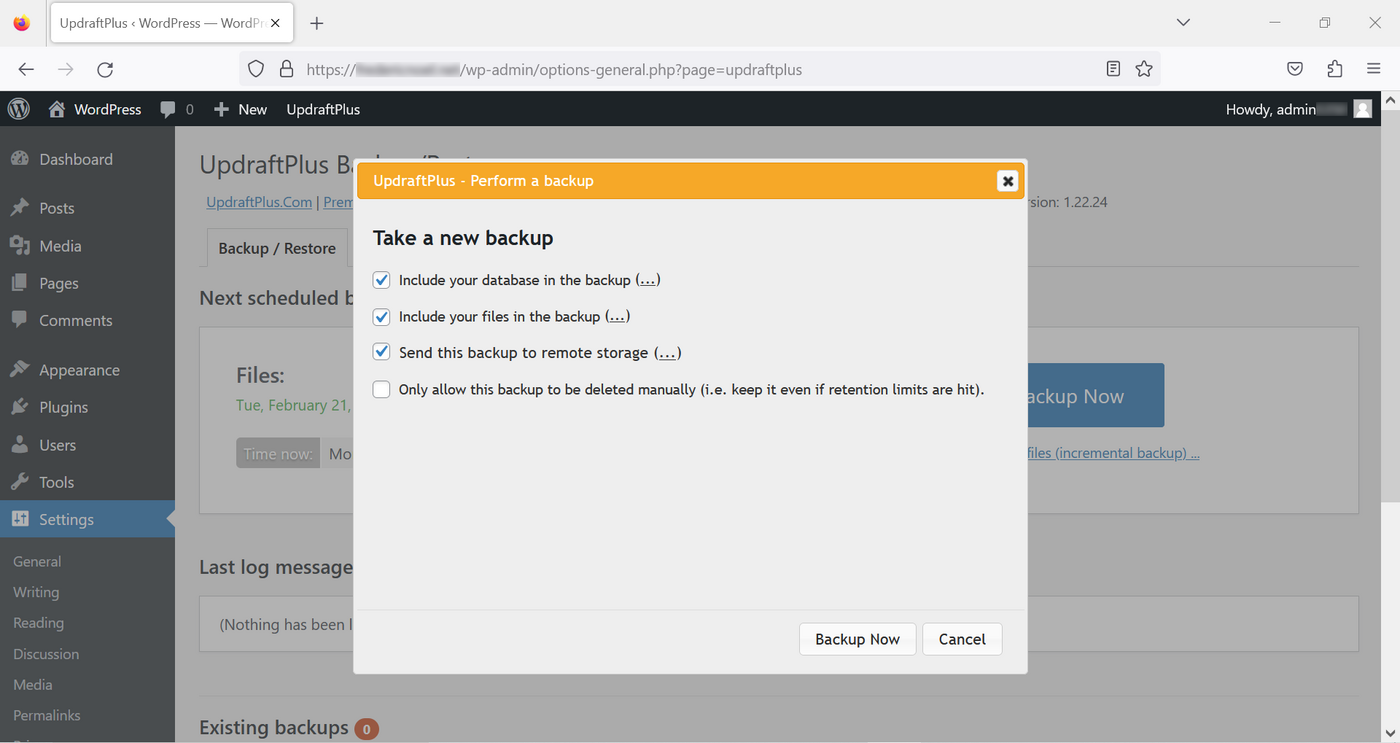
Once your backups are complete, you will receive two emails: one with the content of your WordPress, the other with the database of your website.
If you do not receive any emails, check the email address of the account you are using (in the Accounts section). Also check your spam/junk mail folders.
How to schedule backups
The frequency of your backups is determined by how often you edit your content. A daily backup is useful if you are publishing content to your website every day. Adapt the frequency to match your content updates. You can update it manually (this is the default option). It is also recommended to create a backup before you install or modify themes or plugins.
What to remember
- Integrating a regular backup routine is a good way to secure the content of your website.
- Ensure that your backups are secure.
- Make a backup before you perform an update, and then check that everything is working properly on your website.
By applying these best practices, you can restore the website to a healthy earlier state.
Go further
For specialised services (SEO, development, etc.), contact OVHcloud partners.
If you would like assistance using and configuring your OVHcloud solutions, please refer to our support offers.
Join our community of users.