
Getting started with the Game Panel
Deploy and manage game servers on your OVHcloud VPS or dedicated server with the Game Panel. Supports 140+ titles including Minecraft, ARK, CS2, and Rust.
Objective
The OVHcloud Game Panel lets you deploy and manage game servers for a wide range of popular titles. With its streamlined interface and automated tools, you can launch instances, customise configurations, and monitor performance.
Why choose the OVHcloud Game Panel:
- Easy to use: Designed for both beginners and experienced users.
- Automated deployment: Set up and maintain servers quickly.
- Multi-game support: Run several game servers on a single VPS.
- Resource visibility: Keep full control over system performance.
With OVHcloud infrastructure, hosting game servers becomes straightforward and reliable. Whether you are running sessions on Rust, ARK, Minecraft, Counter-Strike, or other titles, this guide gives you the foundation to start and manage your servers efficiently.
This guide takes you through the first steps of using the OVHcloud Game Panel.
Requirements
- A VPS or a dedicated server in your OVHcloud account with the Game Panel feature enabled.
OVHcloud Control Panel Access
- Direct link:
- Navigation path:
Bare Metal Cloud>Virtual private servers> Select your VPS
Our recommendations
Instructions
Step 1 — Access the Game Panel
From your , locate the game management feature linked to your server and click Open Panel to access the Game Panel interface.
Step 2 — Deploy your first game server
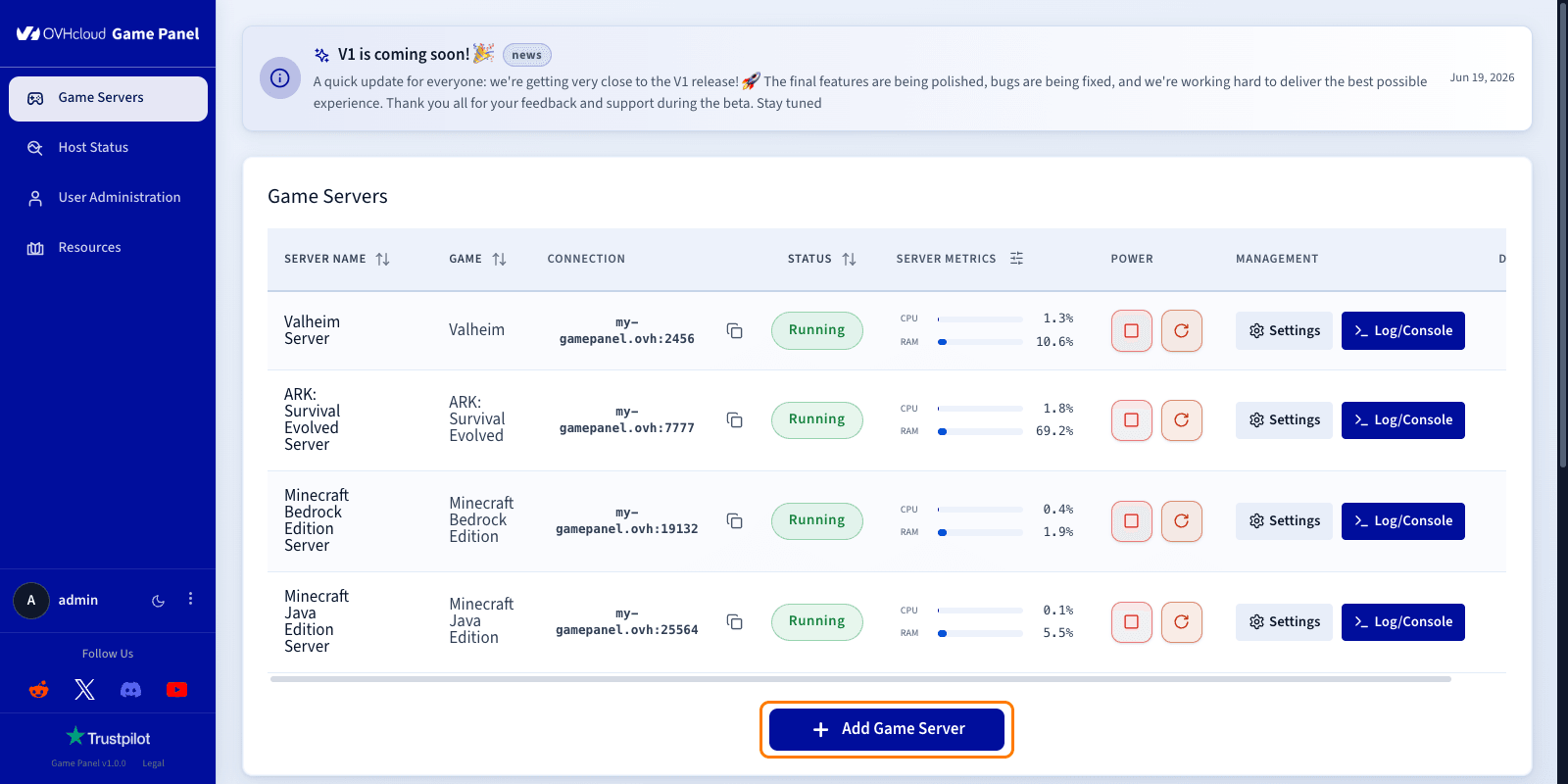
From the Game Servers dashboard, select the option to add a new instance.
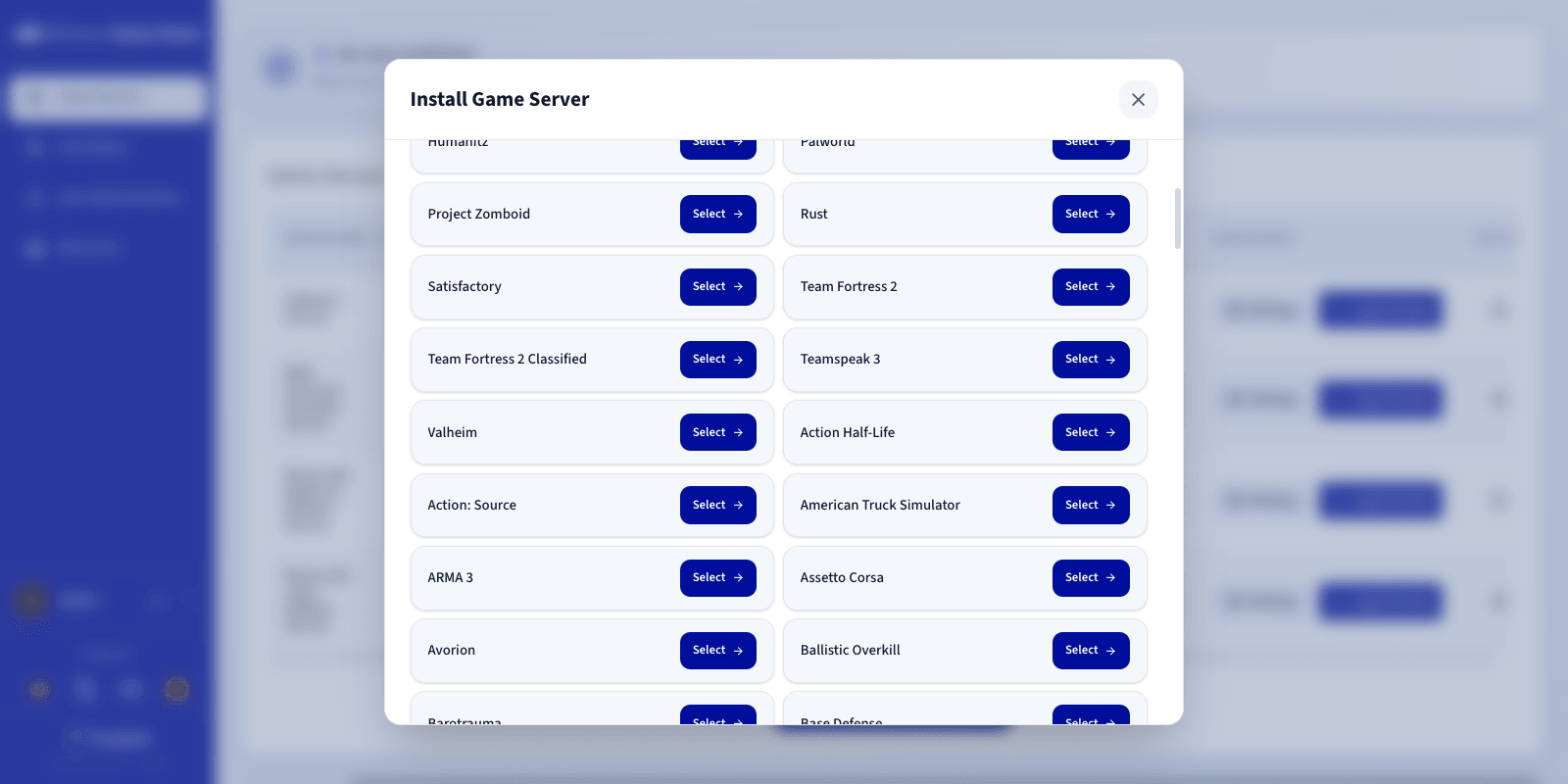
Choose the game you want to host from the available list (140+ games) and click Select. The configuration may vary depending on the game.
- Assign a name to your server.
- Set up ports if needed.
- Launch the deployment process.
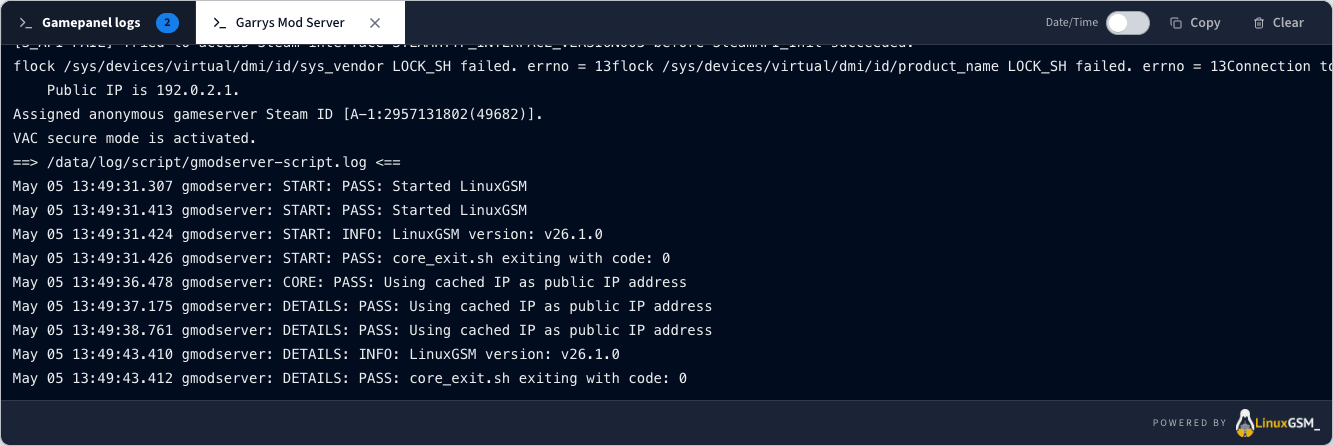
The panel automatically downloads and configures all required files. You can follow the installation progress directly from the log tab.
Step 3 — Manage your server
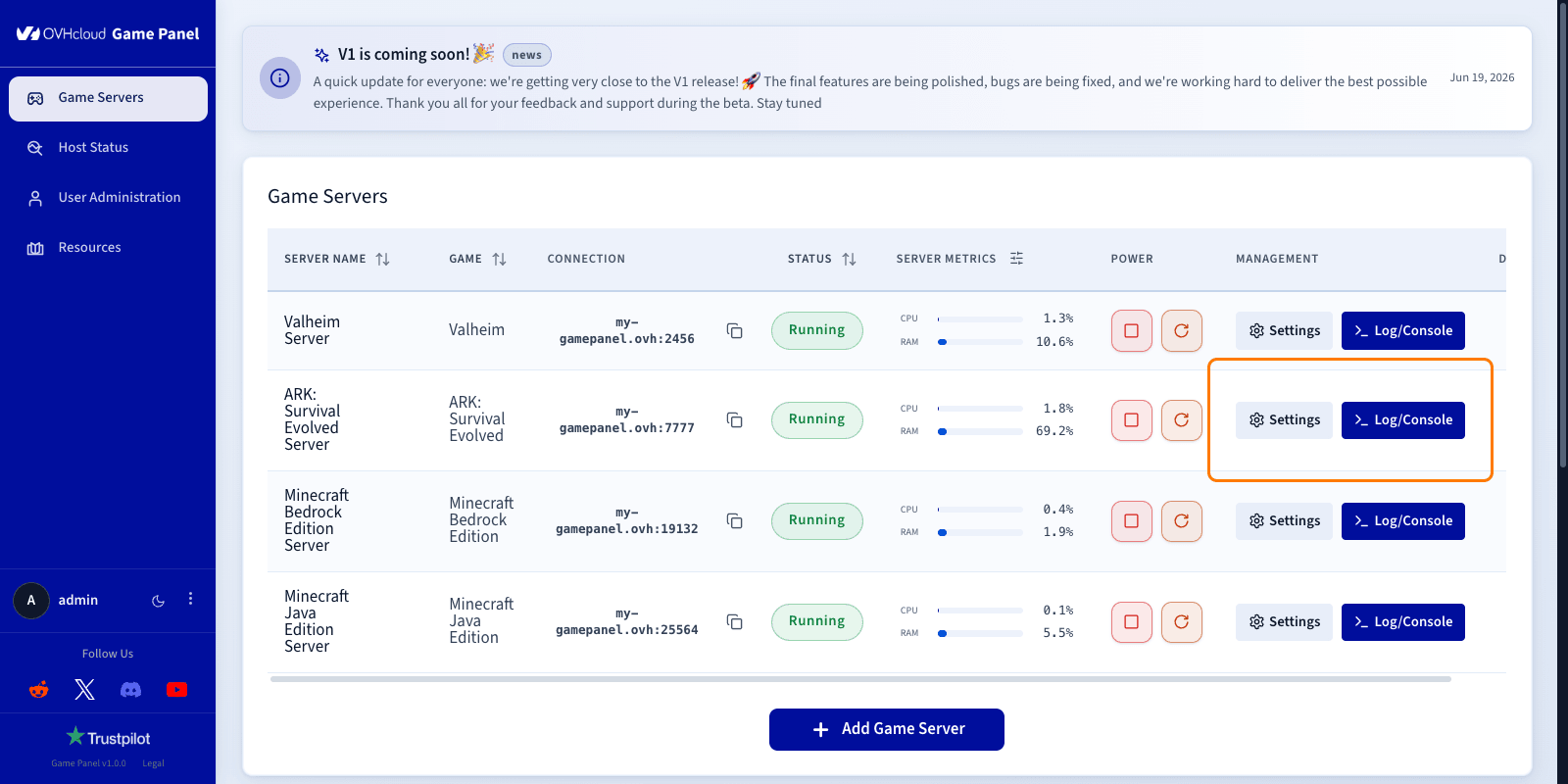
Once deployed, the panel provides the following controls for your game server:
- Start/Stop/Restart the server.
- Edit the server name.
- Copy the IP address.
- View resource consumption (CPU, RAM, disk, and network).
- View connected players in real time (for supported games).
- Access logs and console.
- Delete the server.
Step 4 — Configure game settings
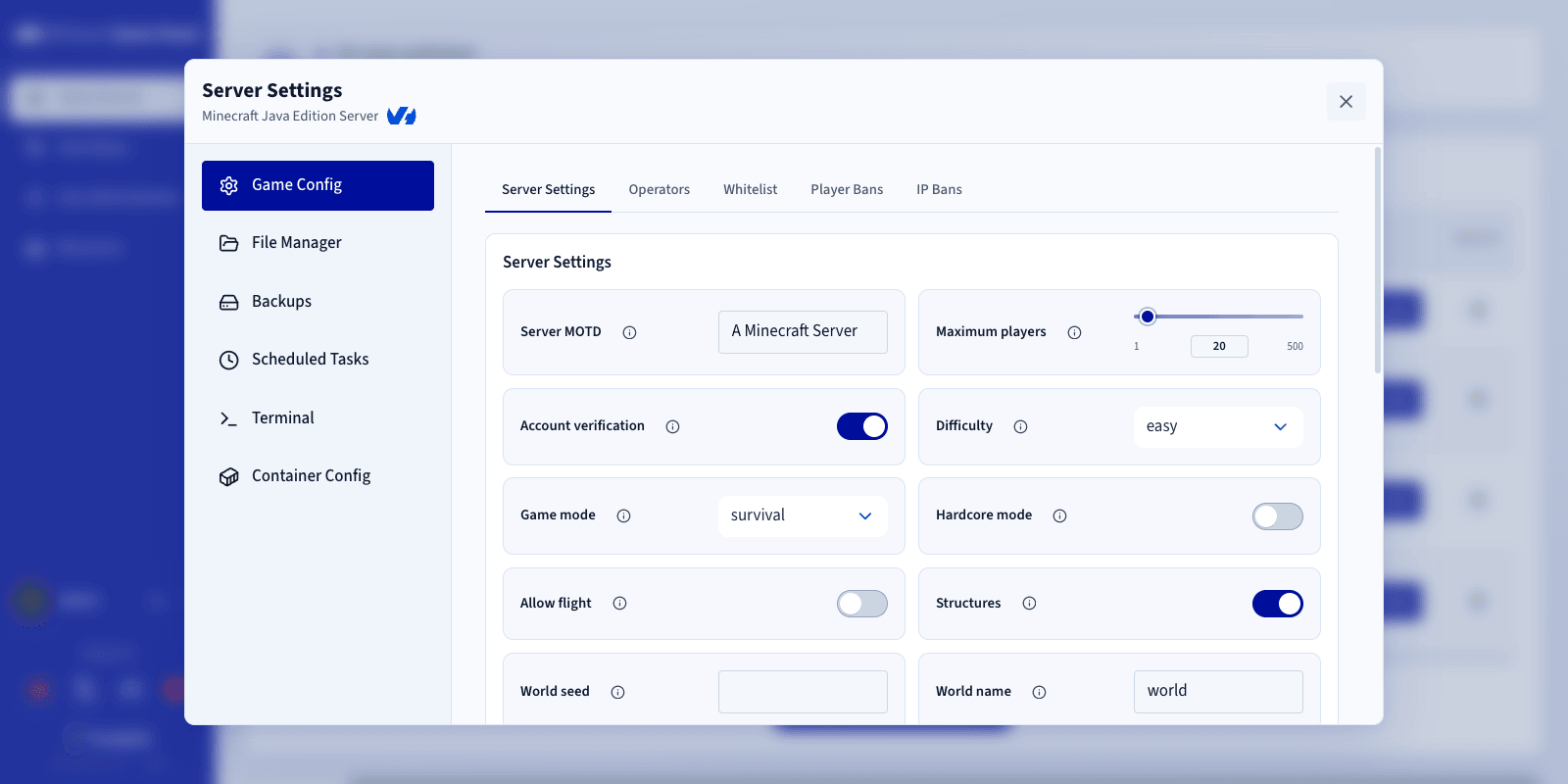
Depending on the game, you can configure options by clicking the Settings button. The following tabs are available:
- Game Config: Adjust game-specific parameters that impact gameplay.
- File Manager: Browse and edit server files.
- Backups: Set up backups and retention for your game server.
- Scheduled Tasks: Automate recurring actions on your server.
- Terminal: Access a full shell inside the server container.
- Container Config: Manage the container image, ports, environment variables, volumes and resource limits.
The Terminal gives full shell access inside the server container. Misuse can break the game server, delete files, or expose sensitive data. Use with caution.
Step 5 — Monitor performance
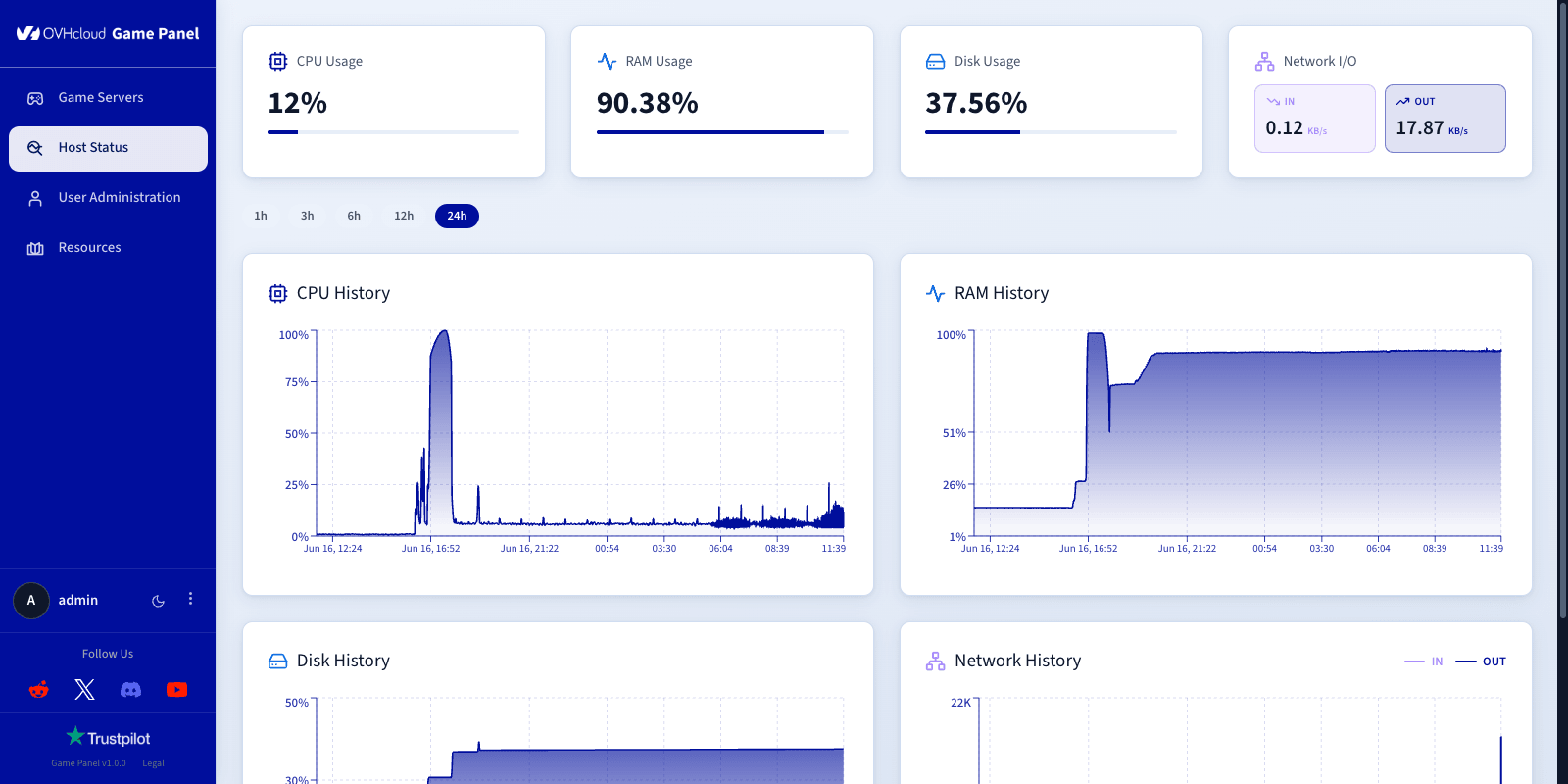
The monitoring section shows your game server's health:
- Monitor CPU, RAM, disk, and network usage.
- Check overall server health.
Step 6 — Manage users
The user management feature controls and customises access to your game servers. For full details, refer to Manage users on the Game Panel.
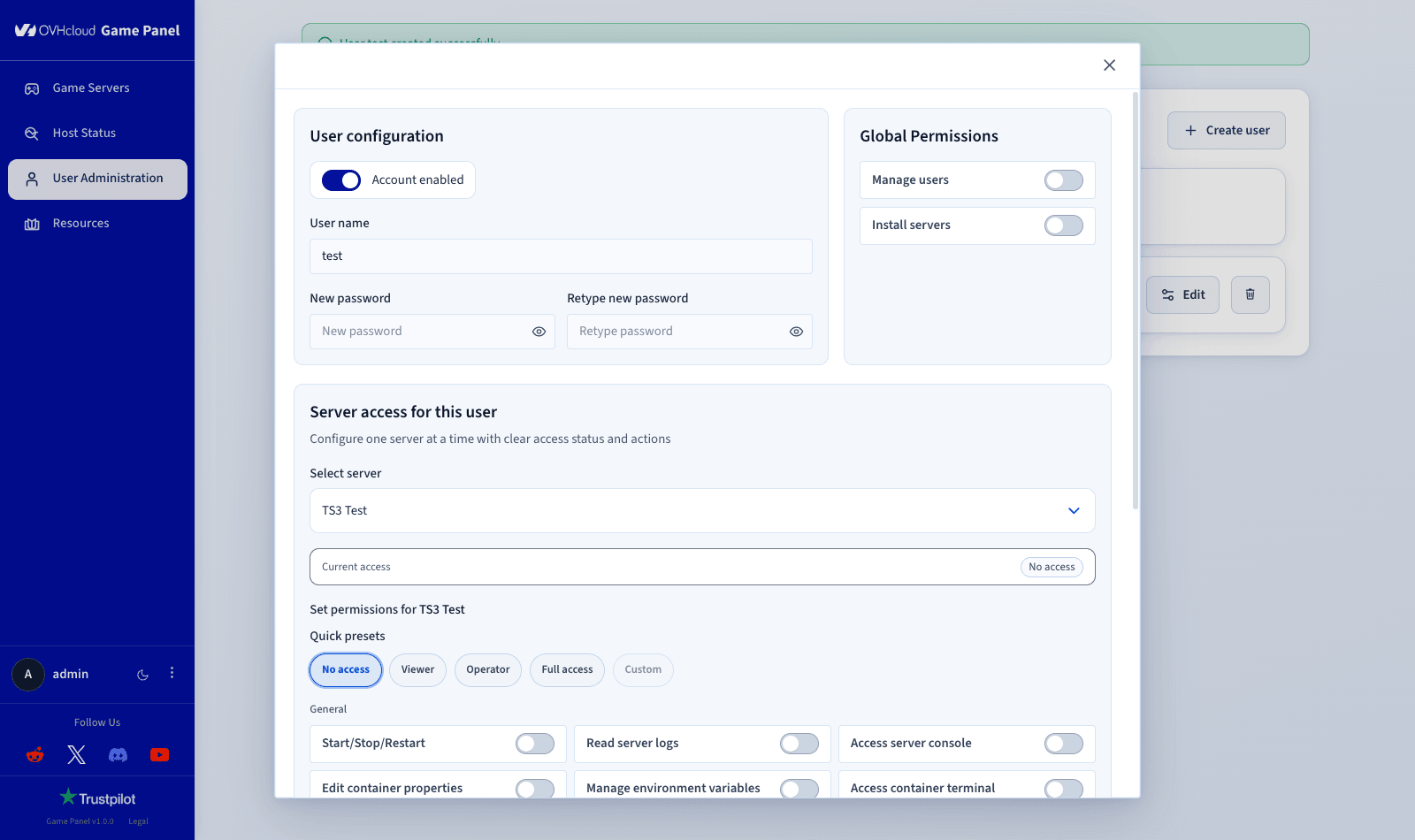
Through this interface, you can create and manage user accounts, enable or disable access, and assign credentials. Each user can then be granted specific permissions, both at a global level and on a per-server basis.
Global-level permissions:
- Managing other users.
- Installing servers.
Server-level permissions:
Predefined roles (viewer, operator, or full access) or custom permissions, including:
- Accessing the server console.
- Starting, stopping, or restarting the server.
- Managing game updates.
- Reading and editing files.
- Handling backups (create, restore, download, delete).
- Accessing logs.
- Accessing the container terminal.
This ensures each administrator accesses only the features they need, improving security and operational efficiency. It is especially useful for teams managing multiple servers or collaborating on game hosting projects.
Go further
Join our community of users.